
Why PEX Is the Smart Choice for Our Freeze-Thaw Climate
When we repipe a home in Prescott Valley, we almost always use PEX. That is not a trend or a shortcut. It is a choice driven by our climate, because at 5,100 feet, the way a pipe handles freezing really matters.
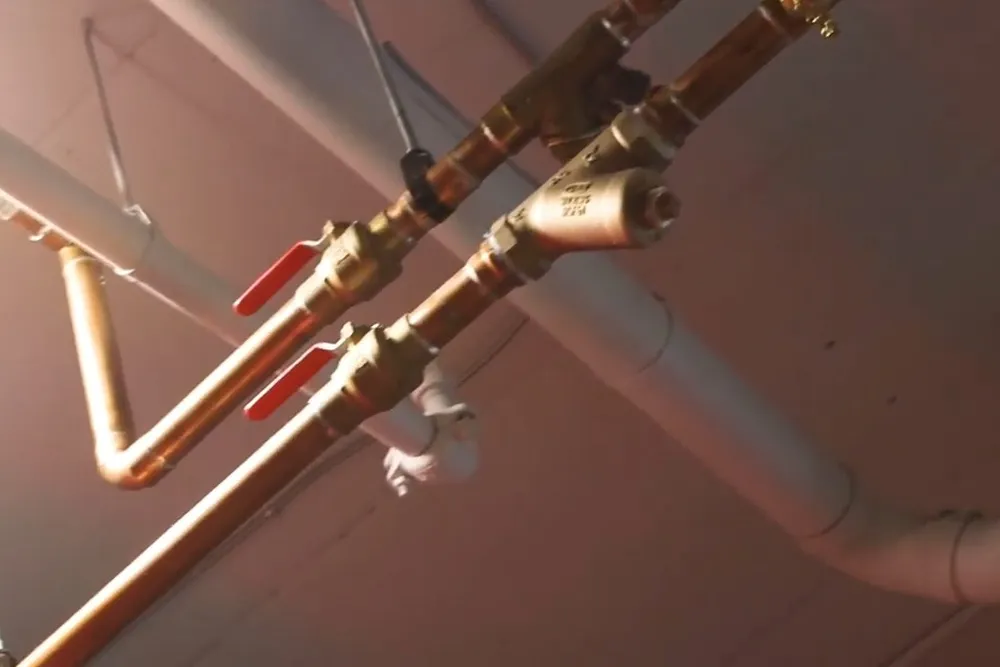
PEX, short for cross-linked polyethylene, is a flexible plastic tubing that has become the standard for home water lines. It is easier and cheaper to install than copper, and it resists the corrosion and scale that kill metal pipe. But in our climate, its biggest advantage is how it handles a freeze.
Why freeze resistance matters here
Prescott Valley sits at about 5,100 feet, and our winters bring hard freezes. When water freezes inside a pipe, it expands, and that expansion is what splits the pipe. Rigid pipe like copper and galvanized has no give, so the pressure cracks it, often at a fitting or a thin spot.
PEX is different. It can expand slightly as the water inside it freezes, then return to shape. That flexibility lets it survive freezes that would split rigid pipe. It is not freeze-proof, and you should still winterize, but it meaningfully reduces the risk of a burst, which is exactly what you want at this elevation.
PEX versus copper versus galvanized
Each pipe material has its profile, and the comparison favors PEX for our area.
- Galvanized: corrodes from the inside, loses pressure, and rusts the water. Outdated for new work.
- Copper: long-lasting but rigid, prone to pinhole leaks over time, and it splits in a hard freeze. It is also more expensive.
- PEX: resists corrosion and scale, flexes with a freeze, costs less to install, and runs with fewer fittings, which means fewer potential leak points.
For a freeze-thaw climate, PEX checks the most boxes. It is why it has become the default for both new construction and repipes here.
When a repipe makes sense
You do not repipe a home on a whim. The time to consider it is when the existing pipe is failing: repeated pinhole leaks in copper, corroding galvanized with low pressure and rusty water, or a system simply old enough that repairs keep stacking up.
At that point, a whole-home repipe in PEX ends the cycle. While the walls are open, we can also route the new lines away from the coldest exterior runs and insulate them, adding another layer of freeze protection on top of the material itself.
Is PEX safe, and how long does it last?
PEX is widely used, code-approved, and rated for drinking water. It has been in homes for decades and is the standard in much of new construction. Quality PEX, properly installed, is expected to last for decades, comparable to or better than the metal pipe it replaces.
The keys are quality material and a proper install, which is where a licensed plumber matters. Done right, a PEX repipe is a long-term fix that suits our climate and our water, and it is one you should not have to think about again.
Frequently asked questions
Why is PEX better than copper for a cold climate?
PEX can expand slightly when water freezes inside it, then return to shape, so it survives freezes that would split rigid copper. At 5,100 feet, where hard freezes are routine, that flexibility is a real advantage. PEX also resists the corrosion and scale that affect metal pipe.
Does PEX really last as long as copper?
Quality PEX, properly installed, is expected to last for decades, comparable to or better than copper in our conditions. It resists the corrosion and scale that shorten metal pipe's life, and it has fewer fittings, which means fewer potential leak points over time.
Is PEX safe for drinking water?
Yes. PEX is code-approved and rated for potable water, and it has been used in homes for decades. It is the standard in much of new construction. As with any pipe, quality material and a proper installation by a licensed plumber are what ensure a safe, long-lasting result.
Will a PEX repipe stop my pipes from freezing?
It reduces the risk, but it is not a substitute for winterizing. PEX flexes with a freeze where rigid pipe splits, so it survives cold that would burst copper. During a repipe we also route lines away from the coldest runs and insulate them. Together that meaningfully lowers your freeze risk.
Related plumbing services
The services where PEX makes the difference:
Thinking about a repipe?
We repipe in PEX, built for our winters. Call a local plumber to talk through whether it is time.
Call (928) 498-0363