
Leak Detection in Prescott Valley, AZ
A hidden leak wastes water and damages your home long before you see it. We find leaks behind walls, under slabs, and out in the yard with acoustic, thermal, and electronic tools, so the repair is precise instead of exploratory.
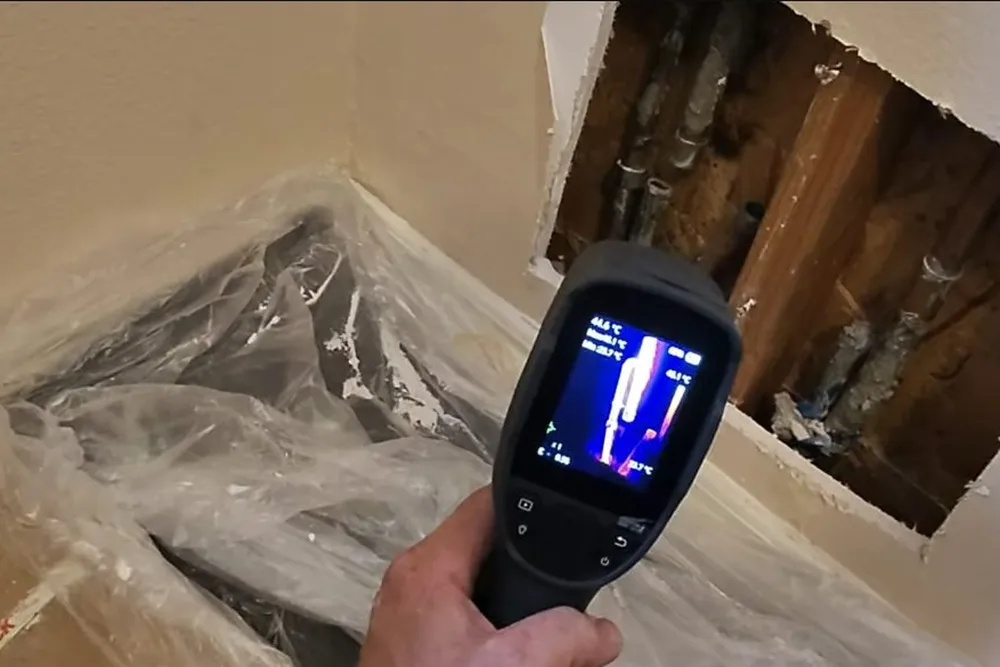
Leak detection finds water escaping where you cannot see it, behind a wall, under the slab, or along a buried yard line, and pinpoints the spot so the repair stays small. We use acoustic listening, thermal imaging, electronic detection, and a simple water meter test to locate hidden leaks. In Prescott Valley, leak detection also covers two local cases: slab leaks under our slab-on-grade homes, and leaks in vacant snowbird homes that run unnoticed for weeks.
Signs of a hidden leak, and why finding it first matters
A hidden leak rarely announces itself. It shows up in small clues that add up.
- A water bill that jumped with no change in how you use water.
- The sound of running water when every fixture is off.
- Damp spots, stains, or warm floors, and a musty smell from slow moisture.
Finding the leak before repairing it is the whole point. Opening a wall in the wrong place wastes money and patches nothing. Precise hidden leak detection means one small opening at the actual leak, not exploratory holes across a room. For homes left empty over winter, a quiet leak can run for weeks, so snowbird vacant-home leak detection during a check-in catches it early.
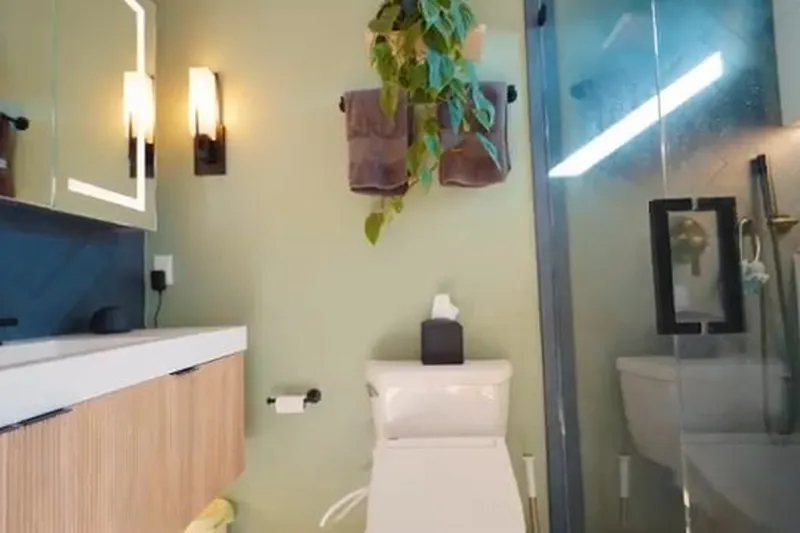
How we pinpoint a leak
Different leaks reveal themselves to different tools, so we use the one that fits.
Water meter test
With every fixture off, a meter that still moves confirms an active leak. It is the quickest way to prove a leak exists before we narrow down where it hides.
Acoustic and electronic detection
Sensitive equipment listens for the sound of water escaping a pressurized line and traces it to a small area. Electronic methods and line tracing narrow it further, even under a slab or behind tile.
Thermal imaging
A hot-water leak warms the surface around it, and a thermal camera makes that pattern visible. In winter, cold-weather leak detection complications can mute the contrast, so we pair thermal with acoustic for accuracy.
From detection to repair
Once the leak is pinpointed, the fix follows the location.
Pinpoint and access
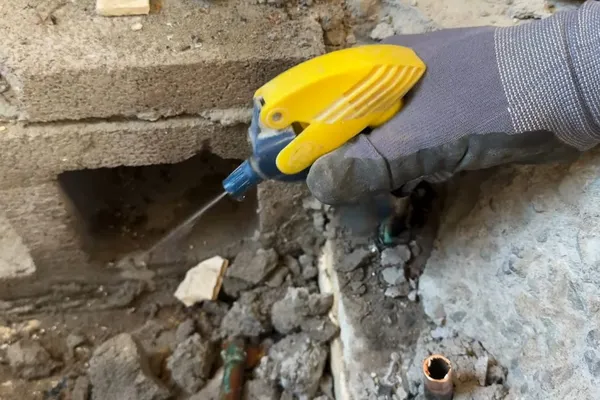
We mark the exact spot, then make the smallest opening needed to reach it. That keeps drywall, tile, and concrete work to a minimum and the repair affordable.
Repair the source
Whether it is a pinhole in copper, a failed fitting, a slab line, or a buried yard line, we repair or reroute the source. For lines that keep failing, we talk through whether a repipe of that run is the smarter long-term fix.
Cost of leak detection in Prescott Valley and the Tri-Cities
Detection is usually a flat visit, and repair depends on what we find and where. A simple fitting is the low end. A slab or buried-line repair costs more. The price comes after the leak is located.
Typical price ranges (2026)
| Job | Typical 2026 range |
|---|---|
| Leak detection visit | $150 to $500 |
| Pinpoint with access | $200 to $700 |
| Repair a hidden supply leak | $350 to $1,500 |
| Slab or buried-line repair | $1,000 to $4,000 |
A slab leak may overlap with slab leak detection and repair. We confirm the price before any work.
Related leak and water work we handle
The same tools that find a household leak find a slab leak, a pool or spa leak, and a leak on the buried water service line. If your bill jumped and the cause is not obvious, we chase it down wherever it hides. For older homes with aging copper, one pinhole leak is often the first of several, and we will lay out whether repairing or repiping that run makes more sense.
Snowbirds get a specific benefit from early detection. A small leak in an empty house can run for weeks and cause real damage before anyone returns. As part of a winter check-in, we can test the meter, scan for moisture, and catch a quiet leak while it is still cheap to fix. It is one of the smartest things to build into a vacant-home plan. A quick meter test costs almost nothing compared to weeks of unnoticed water soaking into floors and walls.
Finding water you cannot see
The signs that there is a hidden leak at all
Hidden leaks announce themselves indirectly. A water bill that jumped with no change in use, the sound of water running with every fixture off, a warm or damp spot on a floor, a stain or bubbling on a wall or ceiling, a drop in pressure, or a musty smell are the common tells. The simplest check is your water meter: note the reading, leave every fixture and appliance off for an hour, and read it again, and if it moved, water is escaping somewhere on your side of the meter. On a well, a pump that kicks on by itself with nothing running points the same way.
How we pinpoint without tearing the house apart
The goal of detection is to open one small spot, not a wall of guesses. We use acoustic listening equipment that hears the specific hiss of water escaping a pressurized line, electronic correlation and pressure testing to narrow the run, and thermal imaging that reads the temperature difference a hot- or cold-water leak leaves on a surface. Together those put the source inside a small area before anything is opened, which keeps the repair targeted and the patching minimal. Pinpointing first is what separates a tidy repair from an exploratory demolition, and it is the whole point of detection.
Slab leaks and our soil
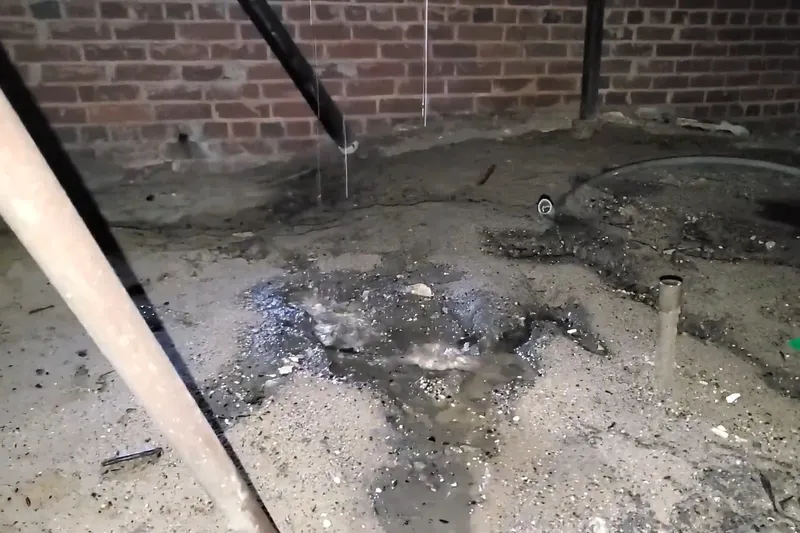
Most Prescott Valley homes are built on a concrete slab, with water lines running through or beneath it, and a leak in those lines is a slab leak. Our decomposed-granite soil shifts with moisture and stresses buried copper over years, and a pinhole there runs continuously and silently under the floor. The clues are a warm spot underfoot on a hot-water leak, the sound of running water with everything off, unexplained damp at the slab edge, and a bill that climbs. Because the water has nowhere to go but into the slab and soil, even a small slab leak wastes a great deal over a month, so finding it early is both a repair and a savings.
What detection saves you
An undetected leak does three kinds of damage at once: it runs up the bill every day it flows, it feeds mold and rot in the structure, and on a slab it can undermine the soil under the foundation. Catching it early turns a contained repair into the whole job, instead of waiting until a ceiling sags or a floor buckles. We locate the leak, show you exactly where and what it is, and lay out the repair options, from a spot fix to a reroute, so you can decide with the facts in front of you.
Where leaks hide, area by area
Supply leaks versus drain leaks
The first thing detection sorts out is whether the problem is on a supply line or a drain line, because the two behave differently. A supply line is always under pressure, so a failure there runs constantly, shows on the meter, and on a hot line can leave a warm spot, and it is the kind acoustic equipment hears clearly. A drain problem only shows when that fixture is used, so it comes and goes and is found by isolating and testing each line. Knowing which type you have tells us where to listen and what to test, and it is the reason a vague damp spot is not enough to start opening walls.
Walls, ceilings, and the irrigation you forget about
A stain spreading on a ceiling usually means a leak in the floor above or in a drain or vent stack passing through, and water travels along framing before it drops, so the wet spot is often not directly under the source. Thermal imaging helps trace it back. Outdoors, a surprising share of high-bill mysteries are irrigation: a cracked valve, a broken lateral, or a stuck zone can waste water silently into the soil, and on our decomposed-granite ground it may never surface visibly. We check the irrigation side when the indoor plumbing tests tight but the meter still moves.
Pool, spa, and well systems
Homes with a pool or spa add another set of pressurized lines, the suction and return plumbing and the equipment pad, and a leak there mimics evaporation until it is tested. On a well system, a failure on the pressurized side makes the pump cycle on its own with no fixture running, which both wastes water and shortens pump life. Detection on these systems is about isolating each loop and pressure-testing it, so the leak is found without guesswork and the right component is repaired.
It is worth repeating that the water meter is your earliest and cheapest leak alarm: a quick monthly habit of glancing at it with everything off catches a developing leak long before it stains a ceiling or spikes a bill. If the dial moves, something is running. When you call us in at that point, the leak is usually small and the repair contained, which is exactly the outcome detection is meant to produce in our slab-on-grade homes where a hidden leak otherwise has nowhere to go but into the foundation.
Frequently asked questions
How do I know I have a hidden leak?
Common signs are a water bill that jumped for no reason, the sound of running water with everything off, damp spots or stains, a warm patch on the floor, and a musty smell. A simple meter test confirms whether water is moving when it should not be.
Can you find a leak without tearing up my house?
Yes, that is the point of detection. Acoustic, thermal, and electronic tools pinpoint the leak to a small area, so we make one small opening at the actual spot instead of exploratory holes. Precise detection keeps the repair small and affordable.
Why is my water bill suddenly high?
An unexplained spike usually means a hidden leak: a running toilet, a slab line, an underground service-line leak, or a dripping fitting inside a wall. We test the meter to confirm a leak exists, then locate it so you stop paying for wasted water.
Does winter weather affect leak detection?
It can. Thermal imaging relies on a warm leak standing out from a cooler surface, and cold weather can mute that contrast. We pair thermal with acoustic and electronic methods so the result stays accurate even on a cold day.
Can you check a vacant home for leaks?
Yes, and it is worth doing. A leak in an empty snowbird home can run for weeks. As part of a check-in, we test the meter and scan for moisture so a quiet leak gets caught early, before it soaks floors, walls, and cabinets.
What happens after you find the leak?
We mark the exact spot, make the smallest opening to reach it, and repair the source, whether that is a fitting, a pinhole in copper, a slab line, or a buried line. If a line keeps failing, we discuss repiping that run instead of repeated patches.
Can a small leak really cause big damage?
Yes. A slow leak behind a wall or under a slab can soak framing and flooring for weeks before a stain appears, inviting rot and mold. The water itself is cheap, but the damage it does is not. Finding and fixing it early is what keeps repairs small.
How do you find a leak inside a wall or underground?
We use non-invasive tools: acoustic listening equipment that hears water escaping, electronic and pressure testing, and thermal imaging that spots temperature changes from a leak. These pinpoint the leak to a small area, so we open only where needed instead of guessing.
What are the signs of a hidden leak?
A water bill that jumped for no reason, the sound of running water with everything off, a warm or damp spot on a floor or wall, low pressure, or a musty smell. Your water meter is the simplest check: if it keeps moving with all fixtures off, water is escaping somewhere.
Keep exploring Prescott Valley plumbing
Related services
Service areas
From the blog
Bill up, but no leak in sight?
Let a local plumber pinpoint the hidden leak before it damages your home. Call for detection.
Call (928) 498-0363